


Building inclusive, collaborative school communities
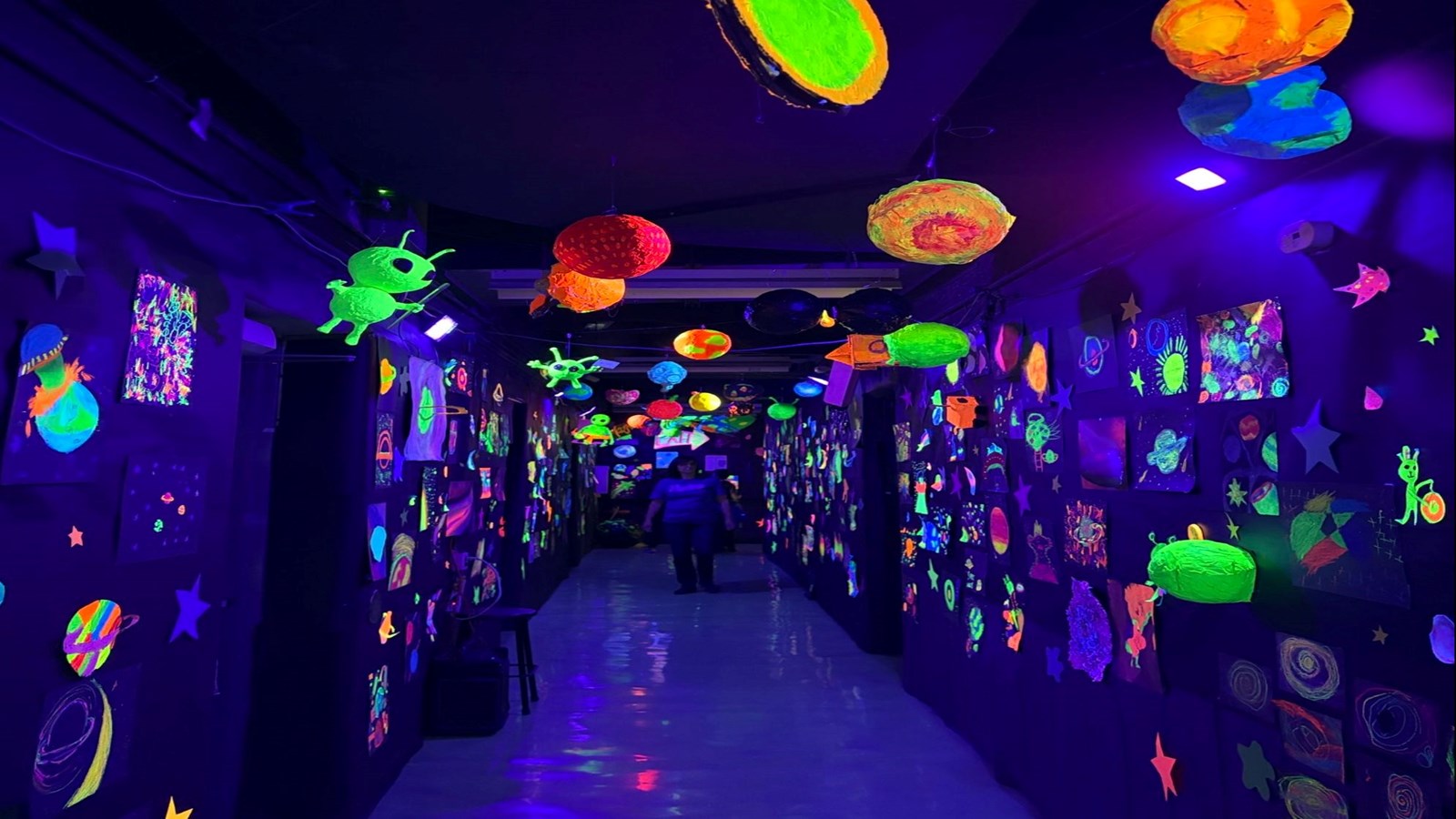
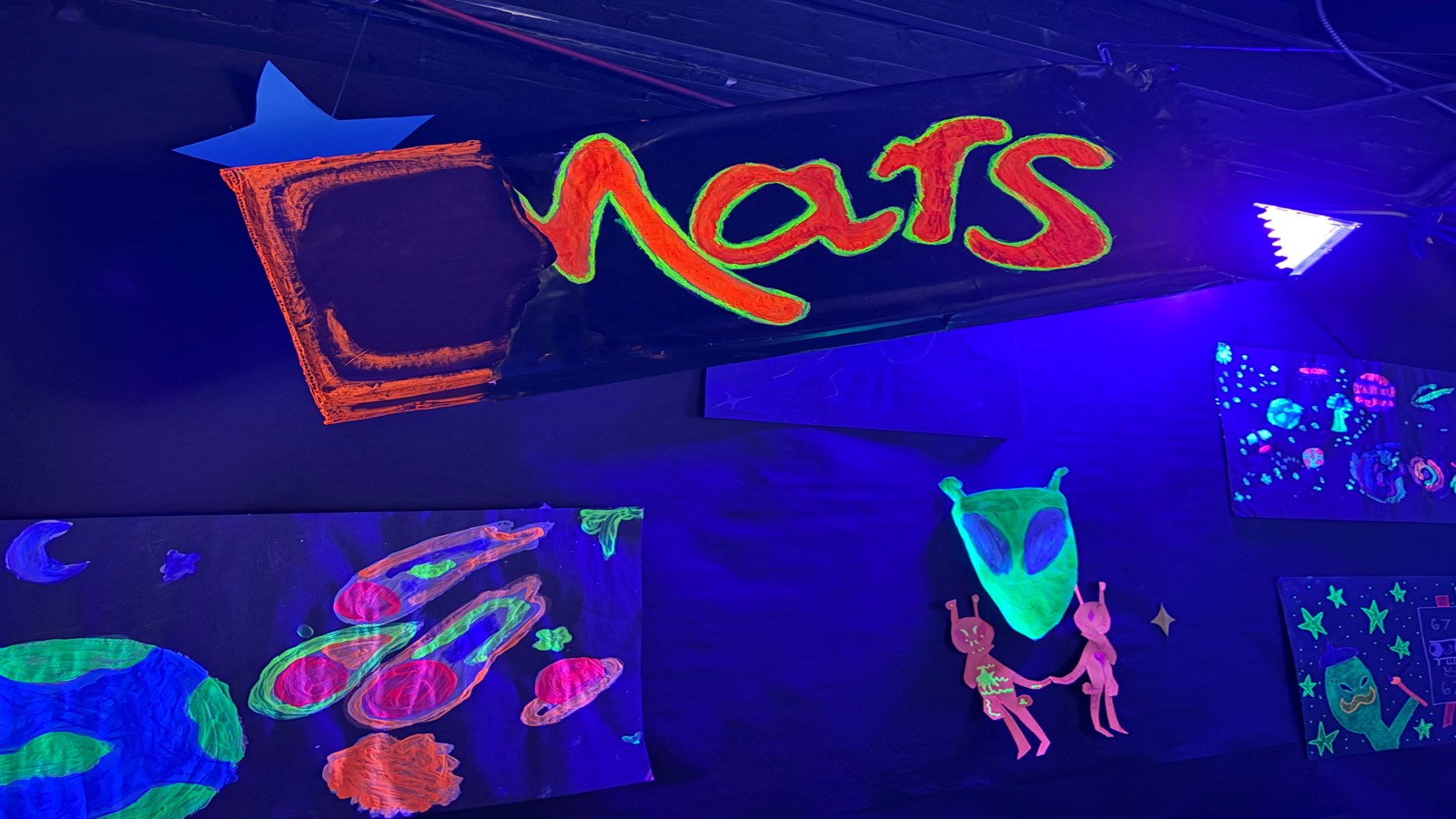
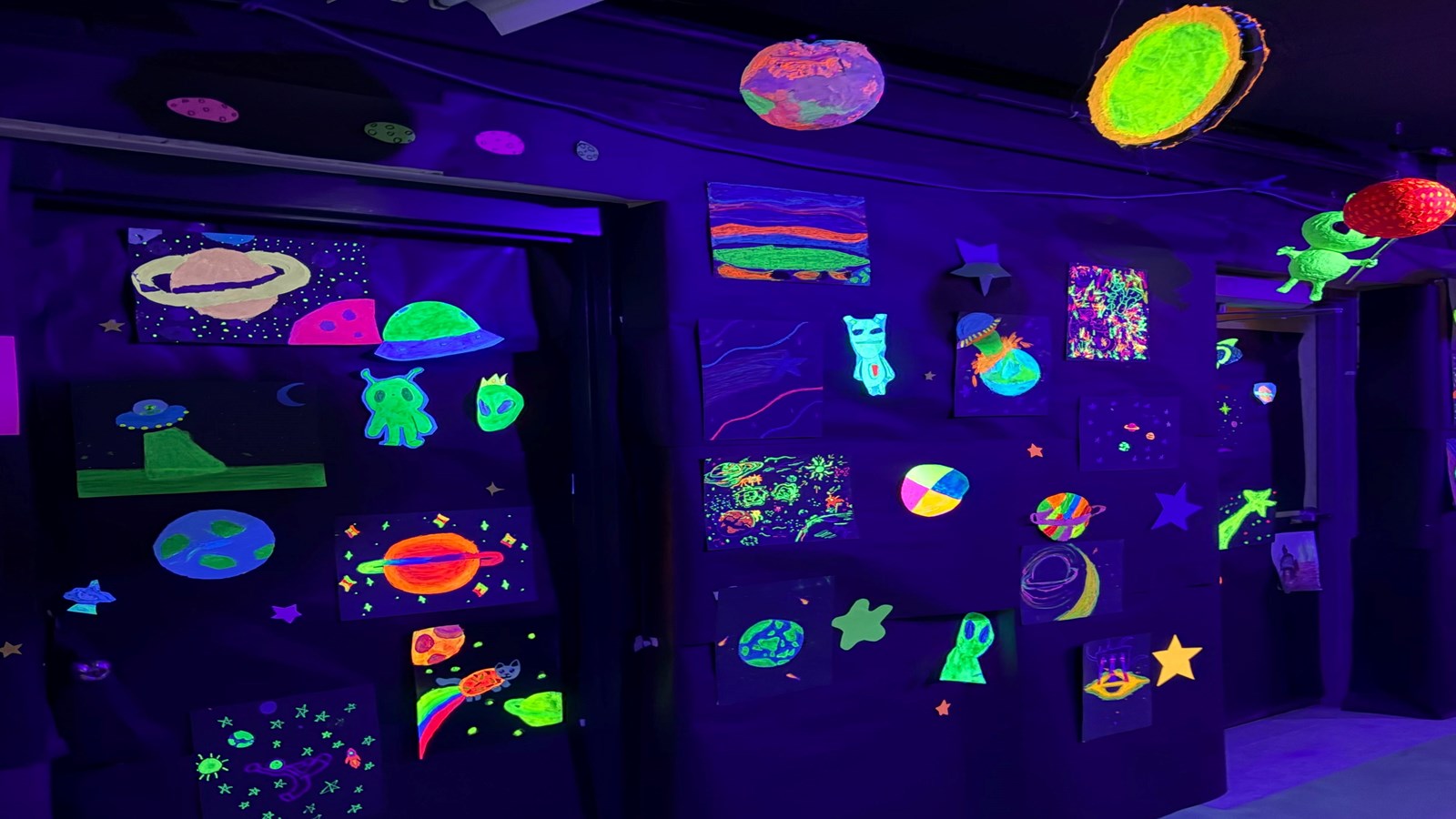
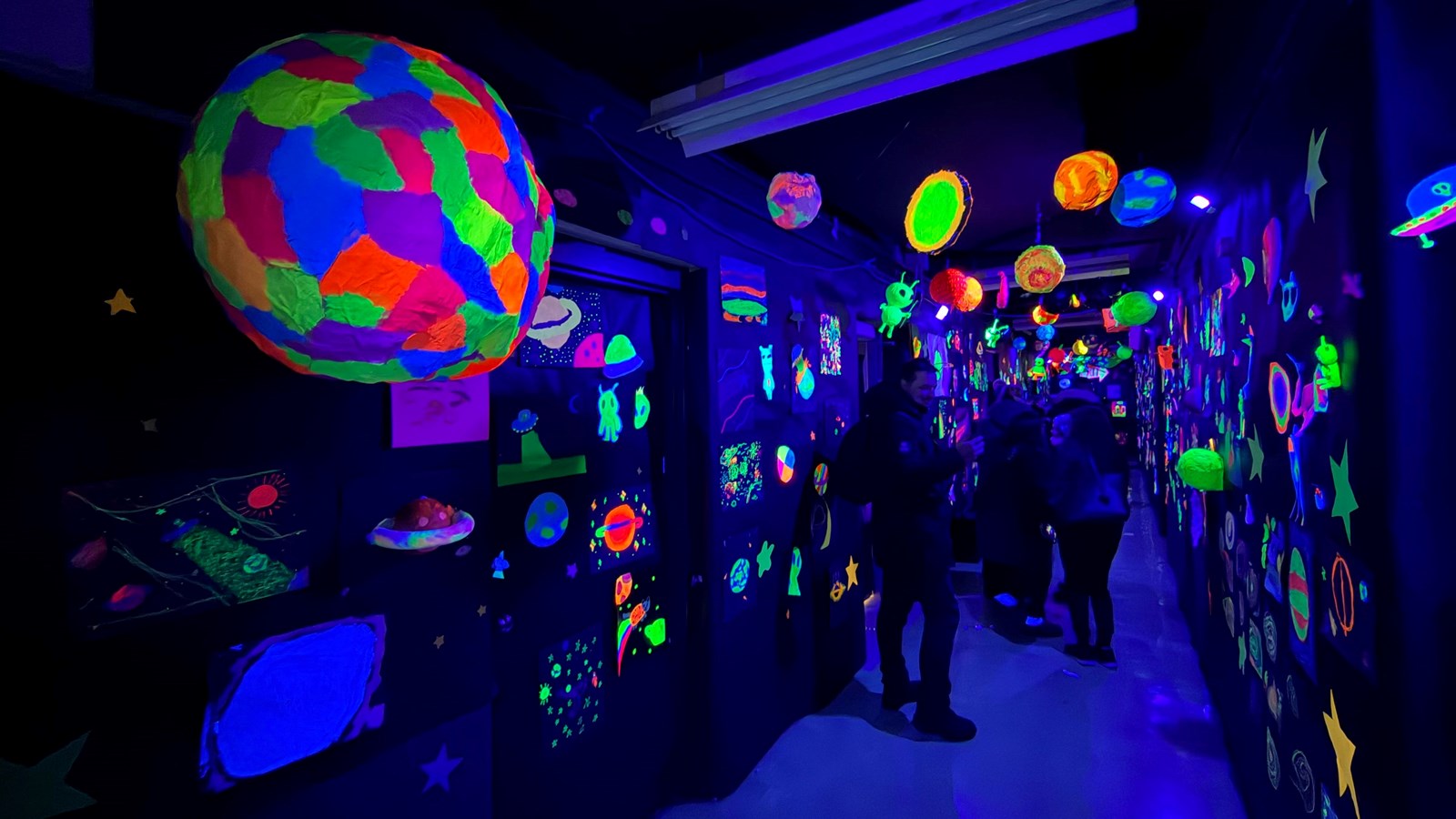
Under the guidance and direction of their art teacher, students at John Pritchard built a glow-in-the-dark art installation called, “Art in Space.” It was complete with stars, planets, spaceships, and extraterrestrial life forms, along with a giant three-dimensional Mars Bar and a galaxy-faced Mona Lisa.
The power of this incredible installation in a basement hallway is not in each drawing, painting, or sculpture, or even in the fact this was the second Glow Show at John Prichard. The true power lies in the fact that every student was invited to participate in creating something for the project. More than 300 students across grades one to eight participated.
“We had drawings and paintings done by our littlest artists and pieces of art done by our students with exceptionalities,” said Visual Arts Teacher Elysia Hodges. “It was inclusive and joyful and captured the wonder of all who got to see it.”
February is Inclusive Education Month – but inclusive education happens year-round. It means being purposeful in lesson planning and being open to students contributing in ways that use and respect their unique strengths and abilities. That may sound complicated, but Manitoba’s Framework for Learning makes it easier with a focus not only on curricula or core subjects but also on the global competencies of creativity, collaboration, critical thinking, citizenship, communication, and connection to self, also known as the six-Cs.
“We teach students, not curriculum,” said Janna Larsen, a Positive Behavioural Intervention Support (PBIS) teacher with the division. “The curriculum is a tool. Being inclusive means reframing how you plan teaching and use curriculum.”
John Pritchard’s Glow Show, now an annual event, is one simple example of how RETSD is promoting and fostering inclusion in our classrooms and school communities. It demonstrates how RETSD teachers look at the whole student rather than a diagnosis and then plan opportunities for every student to use their strengths to contribute, learn, and build community.
“School is supposed to prepare kids for the world, and the world wants the six-Cs, not kids who can sit in rows and memorize,” said Janna.
A big part of inclusive education is implementing structures and routines that are safe and predictable. PBIS teacher Amber-Lee Brajczuk says this helps to create belonging and a sense that everyone fits in.
“It’s about creating structures in your classroom where different kids can engage at different levels,” said Amber-Lee. “It’s also about recognizing how everyone can be an expert and be valued.”
Routine and structure are helpful for everyone, but they make a big difference for students who become anxious or afraid when they don’t know what to expect. When routine and structure are absent, anxiety and fear can lead to maladaptive coping behaviours that aren’t conducive to learning or creating a safe community. Tools like visual cues or having a schedule posted can help to ensure everyone’s needs are being met.
“The best part of the Glow Show this year was seeing the line-up of students with their families waiting to get into experience the art installation,” said Elysia. “It united our school community in a way that celebrated inclusion, creativity, and brought a lot of joy to January.”